Yuanyin Case: Deployment & Operation Record of Commercial Sparkling Drink Equipment for a Tea Shop
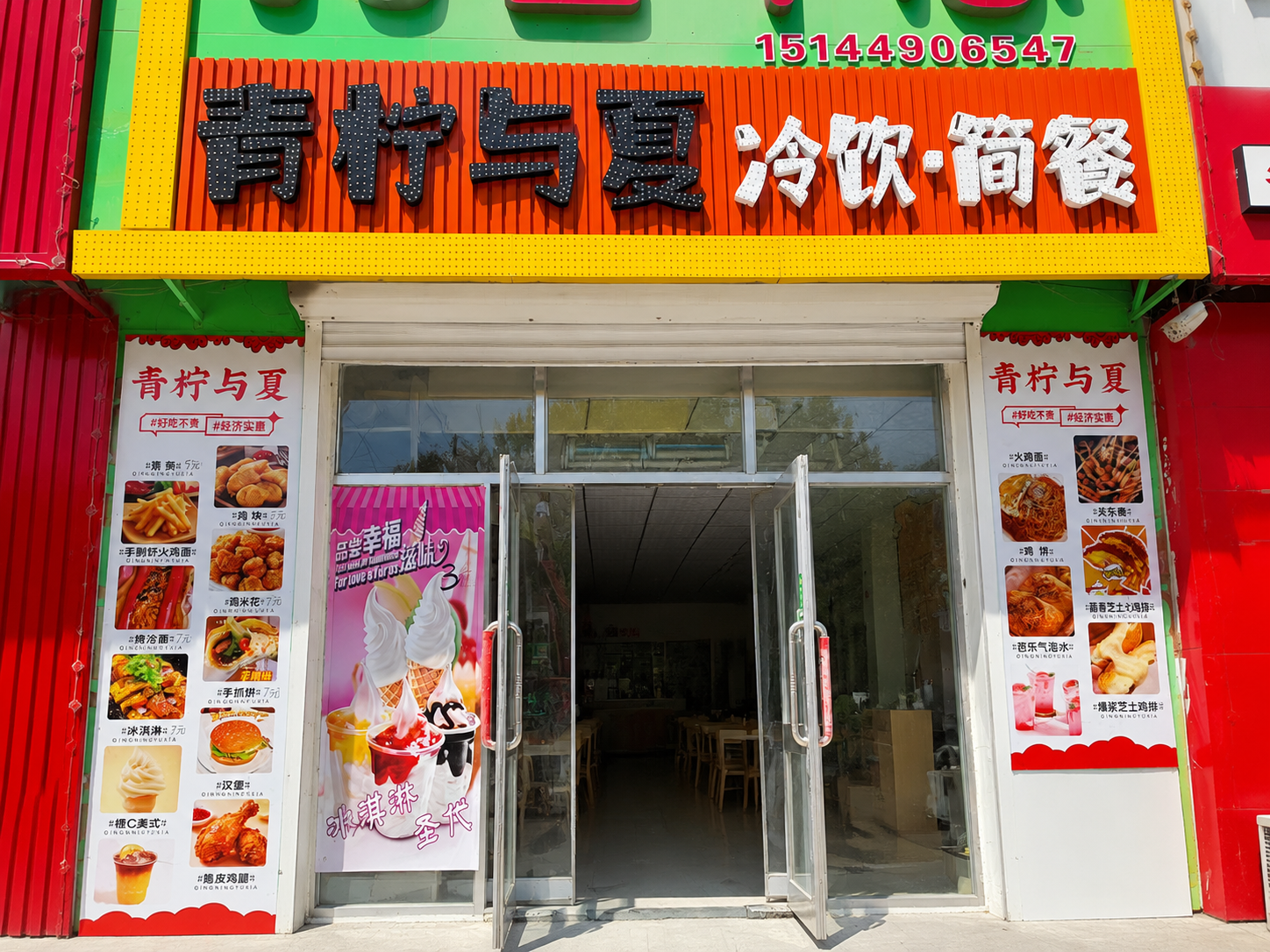
As of 2025, there are over 660,000 tea beverage shops in China, with competition in the industry continuing to intensify. Product homogenization has increased customer acquisition costs, making new product innovation a key breakthrough point.
Carbonated beverages—including sparkling water, fruit-flavored soda, and cola-style drinks—are becoming an increasingly popular menu expansion direction for milk tea shops. Compared with fresh fruit tea, carbonated beverages have lower raw material costs, faster serving speed, and higher gross profit margins.
This case documents the full process of a medium-sized milk tea shop in a second-tier city, from deciding to introduce carbonated beverages to achieving stable operation.
Basic Store Information
Store type: Medium-sized tea beverage shop
Location: Commercial district in a second-tier city
Daily traffic: 150–200 orders
Bar counter area: approx. 4 m²
Available counter width: approx. 60 cm
Drainage condition: no pre-installed drain near the bar
Carbonated Beverage Requirements
After communication with the store owner, three core requirements were identified:
Flavor variety: plan to launch 3 regular flavors (cola, lemon, orange)
Expected output: peak hours 14:00–17:00, estimated 60–80 carbonated drinks/day
Space limitation: only ~60 cm counter space available
Installation constraint: no drainage outlet near bar, requires built-in drip tray or drain-free solution
Decision Logic
Key selection factors for a commercial soda machine:
Number of dispensing valves (determines flavor capacity)
Cooling system (affects stability and maintenance cost)
Installation conditions (determines whether it can be installed and where)
Based on these requirements, the recommended solution is:
YuanYin Sharing Ice Sparkle S2-3F three-valve commercial soda machine
3 valves support 3 standard flavors; sufficient for ≤100 drinks/day
Compact size, compatible with counter load and heat dissipation
Built-in drip tray eliminates need for drainage outlet (solves the biggest installation challenge)
Why 3-valve instead of more or fewer?
2-valve machines: too few flavors, cannot meet demand
3-valve machines: perfectly match 3-flavor requirement, compact size, stable output (3–5 cups/min during peak)
4-valve and above: suitable for higher traffic or more flavors, but unnecessary for ≤100 cups/day scenarios
Applicable Scenarios of S2-3F
The YuanYin Sharing Ice Sparkle S2-3F is suitable for:
Small to medium stores with ≤100 drinks/day
Tea shops, burger shops, fried chicken shops requiring 3 flavors simultaneously
Compact bar counters with limited space
Stores without drainage outlets that do not want to modify flooring (built-in drip tray handles wastewater)
On-site Inspection Before Installation
The installation team confirmed:
Counter space: 60 cm width, sufficient
Load capacity: recommended ≥150 kg (machine + syrup + CO₂ tank)
Ventilation: ≥10 cm rear clearance, ≥40 cm top clearance required
Power supply: 220V, 10A dedicated socket, no extension cords allowed
Water inlet: stable 5–6 L/min required, 4-point valve recommended
Drainage: not required (drip tray used instead)
CO₂ & syrup placement: within 1 m of machine, upright, away from heat
Installation Options Evaluated
Countertop installation → adopted (best for operation efficiency)
Under-counter cabinet installation → not used (requires custom cabinet, inconvenient syrup access)
Back kitchen installation with piping → not used (long pipes, high maintenance cost)
Installation Process
Total time: ~2 hours
Steps:
Position equipment and level adjustment
Connect power supply
Connect water inlet
Connect 3 syrup lines
Install CO₂ cylinder
Install drip tray
Power-on test
Initial calibration
Affects sweetness and foam level:
Too high → overly sweet, excessive foam
Too low → weak taste
Standard ratio: 1:5 to 1:7
Use sugar meter; test 5 consecutive cups for consistency.
Affects carbonation level:
Too low → flat taste
Too high → excessive foaming, waste
Standard: 6–8 Bar
Continuous output of 10 cups
Check consistency in speed, temperature, taste
Ensure no abnormal noise or cooling drop
Daily carbonated drink sales: 55 cups (~92% of expected 60 cups)
Gross profit per cup: +8–10 RMB higher than milk tea
Equipment failure: 0 cases
Customer repurchase rate: higher than expected
Consumables
Syrup: ~2.5L/day total
CO₂ cylinder: lasts ~10–12 days
Cylinder Replacement Service
Customers submit requests via mini-program → verified by support → new cylinder delivered next day → empty cylinder collected simultaneously.
Excess foam: adjust syrup ratio or CO₂ pressure
Slow output: check syrup line blockage or low gas
Poor cooling: ensure ventilation and system check
One flavor not dispensing: syrup depletion or blockage
Rapid gas drop: check leakage or high usage
Drip tray overflow: increase emptying frequency
Q1: How much bar counter space is needed?
Recommended ≥60 cm width, ≥150 kg load capacity.
Q2: Can it work without a drain outlet?
Yes. Built-in drip tray collects wastewater; manually emptied daily.
Q3: Where to get syrup and CO₂? Replacement cycle?
Provided by YuanYin. CO₂ lasts 10–12 days at ~55 cups/day.
Q4: What if the machine breaks?
1-year warranty, 3-year compressor warranty. Repair response within 48 hours in urban areas.
Q5: Profit margin of carbonated drinks?
Raw cost ~2–3 RMB; selling price 12–18 RMB → significantly higher than fruit tea.
Q6: Is a 3-valve machine enough?
Yes, for ≤100 cups/day. Peak output 3–5 cups/min.
Myth 1: Plug in and use immediately
Installation conditions (power, ventilation, load) must be confirmed in advance.
Myth 2: No drain = cannot install
False. S2-3F uses drip tray system.
Myth 3: More valves are better
Not necessarily. Choose based on demand.
Myth 4: CO₂ empty means machine failure
Normal consumable depletion.
Myth 5: Calibration is optional
Incorrect calibration affects taste consistency.
Risk Warnings
Ensure dedicated 220V power circuit
Maintain ≥10 cm rear and ≥40 cm top clearance
Ensure ≥150 kg countertop load capacity
CO₂ cylinder must be upright and ventilated
Empty drip tray daily
Install and test at least 3 days before opening
Q: Do I need special licenses?
No, it falls under ready-made beverage operations.
Q: Will peak hours cause delays?
No, system supports 3–5 cups/min; bottlenecks are usually manual operation.
Q: Can flavors be changed anytime?
Yes, by replacing syrup bags and flushing lines.
Q: How often to empty drip tray?
Daily, or during peak use if needed.
Final Brand Statement
Equipment is the tool, scenario is the foundation, details define success—
YuanYin Sharing Ice Sparkle S2-3F helps you get every step right.